

The Best Dual-Boiler Espresso Machines
A dual-boiler espresso machine earns its size when you make milk drinks often and want to control the shot yourself. The Breville Dual Boiler is one of the machines to compare.
We may earn a commission from links in this guide. As an Amazon Associate I earn from qualifying purchases.
Two boilers sound like a technical upgrade until you are making two lattes in a row. Then the point is simple: brew a shot and have steam ready without waiting for one heating system to change jobs. The Breville Dual Boiler is a place to start that comparison. Whether the extra size and upkeep are worth it depends on how often your kitchen actually makes milk drinks.
The Breville Dual Boiler is the practical comparison for a capable station with a separate grinder. The Rancilio Silvia Pro X offers a more traditional control layout, while the pricier machines change the controls and ownership experience. Warm-up, service and water care matter over years of use. Boiler count is only the beginning of the choice.
Everything we recommend
Our picks

Our pick for back-to-back drinks
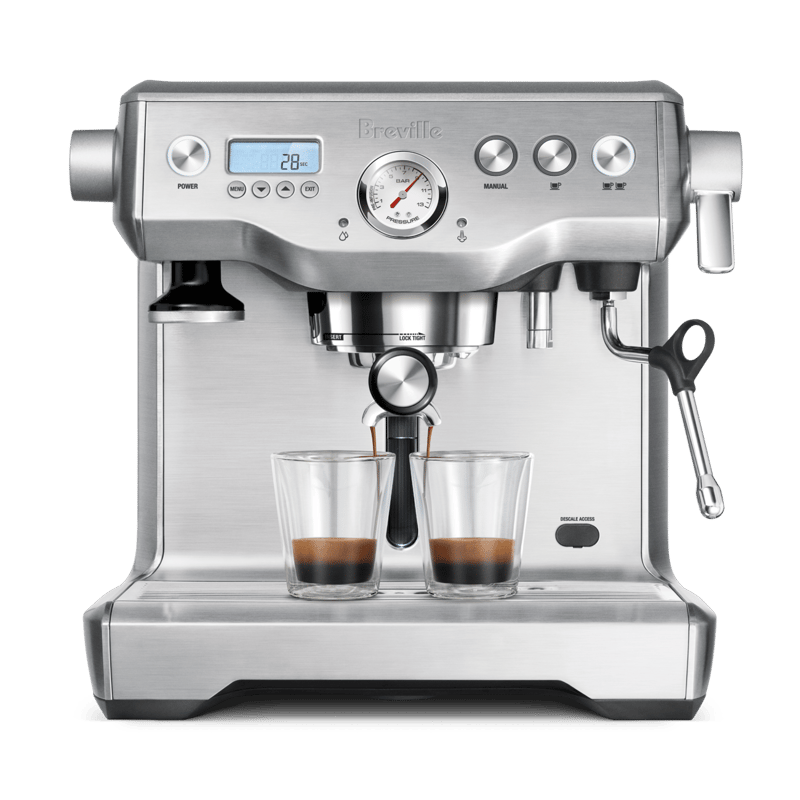
Breville Dual Boiler
The Breville is a practical dual-boiler entry if you want to pull a shot while preparing milk without waiting for one boiler to change roles. That matters most for back-to-back cappuccinos, less for one straight espresso. Temperature settings invite experimentation, but consistency begins with fresh coffee and a grinder that can make small changes. Account for warm-up, cleaning and the combined footprint of machine, grinder and accessories. A dual boiler solves a workflow bottleneck only if you make enough drinks to encounter it.

For a traditional workflow
Rancilio Silvia Pro X
Silvia Pro X favors a person who likes a conventional portafilter routine. A separate steam boiler makes consecutive milk drinks less of a stop-start exercise, but the machine still expects the operator to manage grinding, dose and shot timing. Put it beside your grinder in a measured counter layout and check the room above for filling and cleaning. The traditional feel is an attraction if you enjoy the work; it can be unnecessary expense if most cups are made in a rush.

For a more integrated setup
Meraki Espresso Machine Gen 2
Meraki combines tasks that normally occupy several places on the counter. A grinder and built-in weighing can reduce moving a separate scale from prep to cup, particularly when you repeat the same recipe each morning. Integration also means that one machine's controls and maintenance become central to the whole setup. Consider how you would adjust grind, clear retained grounds and service a component later. A longer-established separate grinder and machine give more freedom to replace one part at a time.
The research
How to choose the best dual boiler espresso machine
Start with the drinks you make most. A dual boiler lets the brew and steam sides operate at their own temperatures, so you can pull a shot and texture milk without waiting for one heater to switch modes. That matters less for one straight espresso before work. For several lattes, being able to work the wand while a shot runs changes how quickly you can serve everyone.
Think through a normal morning in order: grind, dose, tamp, brew, steam, pour, purge and clean. A machine with many adjustable controls can be rewarding if you will actually use them, but it will not remove the work around the shot. If another person in the household wants a push-button drink, compare a super-automatic rather than assuming more manual hardware is an upgrade for everyone.
Check what goes around the machine
Plan for the grinder, room to knock out a puck and access to the water tank. Measure height below upper cabinets, including the space needed to remove a reservoir or fill it from above. Leave room to turn the portafilter and move a milk pitcher around the steam wand. A machine can fit on paper and still be awkward every day if you must pull it forward to refill or empty it.
Look into the electrical and water setup in the manual before committing to a large machine. Some buyers will use a reservoir, while others may care about a plumbed option; confirm what the specific model supports. Follow the maker’s water-quality and cleaning instructions. Scale, filters and backflushing are ongoing ownership tasks, and a larger machine can be less convenient if it is difficult to access for routine care.
Consider your daily volume
A smaller machine makes sense if most of your guests want another kind of coffee or you only make several milk drinks on rare occasions. A single-boiler or thermocoil setup can be a simpler choice for one person who makes a single shot or latte at a time. A dual boiler earns its counter space when you routinely prepare drinks back to back and value the ability to brew and steam in parallel.
Compare how long each machine takes to be ready from a cold start and how you actually schedule coffee. A timer or scheduled warm-up can be useful for a predictable morning, but it will not help much if your use is spontaneous. Also look at tank and drip-tray access between drinks. The best workflow is the one that makes the whole routine manageable, not merely the fastest quoted extraction time.
Why two boilers matter
A dual-boiler machine has separate brew and steam heating paths so you can prepare espresso and milk without waiting for one boiler to change temperature. Breville Dual Boiler and Rancilio Silvia Pro X are established manual options, but they differ in controls, dimensions and workflow. Meraki Espresso Machine Gen 2 adds a different degree of integration; Diletta Alto and Rocket R58 Tune are higher-end alternatives to compare on controls, service and counter setup.
A second boiler does not solve a poor grind. Budget for a capable espresso grinder unless the exact system includes one. Also decide whether you want to weigh and time shots yourself or prefer more prompts from the machine.
A machine must fit the kitchen and routine
Measure width and depth plus the room needed to fill the tank, remove the drip tray and reach the water supply. The Rocket and Diletta options may ask for more counter room and a different warm-up routine than a compact machine. Compare the manufacturer’s water guidance and descaling or maintenance instructions. If you make one milk drink a day, the convenience gain from simultaneous brewing and steaming may be less valuable than it is for a household making several in a row.
Compare local service availability and parts support before a high-cost purchase. An expensive machine’s long-term value depends on maintaining it. We compared maker-published boiler designs, controls and ownership factors.

Why two boilers change the pace
The value of a dual-boiler machine is most obvious when a shot and milk drink belong to the same order. You can brew at one temperature and have steam ready without waiting for a single heating system to change jobs. That does not automatically make the drink better. It removes a pause and gives you a steadier workflow when you are making several drinks in a row.
If you make one straight espresso a day, much of the machine’s capacity may go unused. If you make lattes for two people every morning, the convenience becomes easier to feel. Compare warm-up behavior, the controls you will touch and how much room you need to refill the tank and operate the steam wand. A heavy machine that crowds the counter can make a fast workflow feel slow.

For a substantial counter setup
Diletta Alto
This makes sense if you regularly serve several milk drinks and want separate temperature settings and a larger steam reserve. The quick action valves are handy when you’re going back and forth. This version skips the optional flow control, and you’ll buy the grinder separately.
Choose the controls you will enjoy using
The Breville Dual Boiler gives a different experience from the Rancilio Silvia Pro X or Rocket R58 Tune. Some owners want to see and change temperature, preinfusion or shot time. Others want a stable recipe and as few decisions as possible. Pick the machine whose interface matches your appetite for adjustment, then pair it with a grinder that can make the small changes those controls reveal.
Think past the purchase day. Water treatment, backflushing and eventual service belong in the ownership cost. Confirm what maintenance the maker recommends for your water and whether you have a practical service path. A dual boiler can be a rewarding centerpiece, but it should fit the kitchen and the routine that will use it every day.
Controls that change the shot
Compare the brew-temperature setting, pre-infusion controls, shot timer and pressure display for the kind of dialing in you want to do. Breville’s Dual Boiler documentation describes separate stainless-steel brew and steam boilers and an actively heated group head. Those design choices aim to keep the brew path stable while steaming, but the cup still depends on beans, grind, dose and technique. A large control menu is helpful only if the controls are understandable enough to repeat a good result.
Check the portafilter size and basket options before buying a grinder and accessories. A tamper or precision basket that fits one machine will not necessarily fit another. If you already own a grinder, make sure it offers sufficiently fine, repeatable adjustments for espresso; otherwise include a grinder in the purchase budget rather than judging machines by their standalone prices.
Ownership questions before checkout
Read the manual for the current model and note its cleaning cycle, water guidance, warranty terms and service route. Ask how long you are comfortable being without the machine if a repair is needed. For a high-cost machine, available parts and a practical service path can matter as much as the list of features on day one. If you are buying from a marketplace, check which seller provides warranty support and what is included in the box.
We compared manufacturer-published designs, controls and setup requirements. Use the guide to narrow the format and features, then verify the current product page and manual for the exact variant before spending. That distinction matters most for machines with similar names but different packages.

For a premium setup
Rocket R58 Tune
I’d look here if I wanted to plumb in or adjust how the machine handles preinfusion and postinfusion. It has the largest steam boiler here. Measure the counter depth and factor in the grinder and any plumbing work.
Two boilers matter most during consecutive milk drinks
A dual boiler can brew and steam at the same time, but it does not make coffee preparation automatic. The benefit is clearest when someone makes several lattes in a row and already has a grinder and technique they like. For one espresso each morning, the warm-up, footprint and maintenance of a large machine may outweigh the saved transition time. Compare the actual shot and milk sequence you use rather than assuming the more expensive configuration is always an upgrade.
The Breville Dual Boiler is a different ownership proposition from the Rancilio Silvia Pro X or a plumbable machine such as the Rocket R58 Tune. Check tank access beneath your cabinets, electrical requirements, service support and parts availability where you live. A rotary pump or plumbing option is valuable only if the installation is practical. Ask how backflushing, descaling and water treatment are handled for the exact model. Budget for a capable grinder; an excellent espresso machine cannot correct an inconsistent grind.
Common questions
Do I need a dual boiler for straight espresso? Not necessarily. The independent steam system is most useful when milk drinks are central.
Can I use pre-ground coffee? The machine may accept it, but a suitable fresh grinder gives more control over extraction.
What else should I budget for? Grinder, water care, accessories and routine maintenance.